
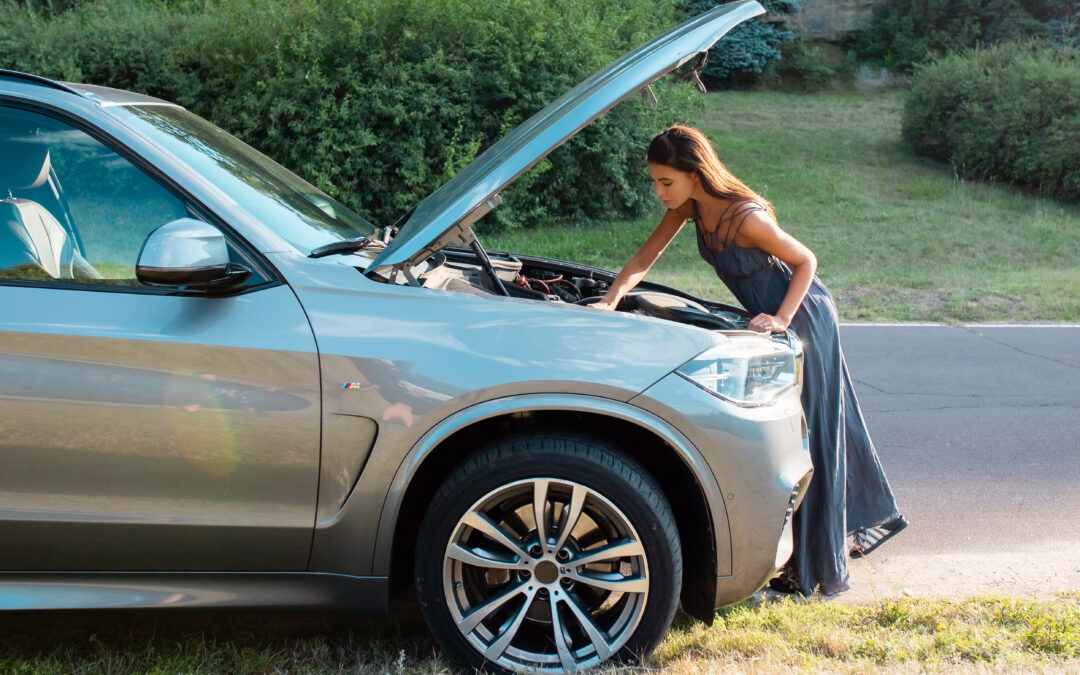
You turn the key or press the start button, the dashboard lights come on, and maybe you can even hear the engine trying to start—but nothing happens. Most drivers immediately assume they have a dead battery. But what happens when the battery is fully charged and your car still won’t start?
A no-start condition can be caused by several different mechanical or electrical problems. At Catlett’s Auto Service & Towing in Davidsonville, MD, we’ve been helping Maryland drivers diagnose automotive problems and get back on the road since 1976.
If your car won’t start but the battery seems fine, here are some of the most common problems that could be responsible.
1. A Failing Starter
The starter motor uses electricity from your battery to crank the engine when you start your vehicle. If the starter fails, a perfectly healthy battery won’t be enough to get the engine running.
Possible signs of starter trouble include:
- Clicking when attempting to start
- Dashboard lights working normally
- Engine failing to crank
- Intermittent starting problems
Because battery and starter problems can produce similar symptoms, proper testing is important before replacing either component.
2. Alternator or Charging System Problems
The alternator provides electrical power while the engine is running and helps recharge the battery.
Although a charged battery may initially start a vehicle with a weak alternator, charging system problems can eventually cause electrical issues or leave you unable to restart the engine.
Possible warning signs include:
- Battery warning light
- Dim or flickering lights
- Electrical accessories behaving strangely
- Vehicle stalling
A charging system test can help determine whether the alternator is operating correctly.
3. Fuel Delivery Problems
Your engine needs the correct amount of fuel to start and run.
Problems with the fuel system may prevent fuel from reaching the engine even though the starter is working properly.
Possible causes can include:
- Fuel pump problems
- Fuel delivery restrictions
- Electrical problems affecting the fuel system
- Fuel system components that have failed
If the engine cranks normally but refuses to start, fuel delivery is one of several areas that may need to be investigated.
4. Ignition System Problems
Your engine needs a properly timed spark to ignite the air and fuel mixture.
Worn or malfunctioning ignition components can cause:
- Hard starting
- Engine misfires
- Rough operation
- No-start conditions
Spark plugs, ignition coils, sensors, and related components can all contribute to starting problems.
5. Bad Electrical Connections
Sometimes the battery itself is perfectly fine, but electricity isn’t getting where it needs to go.
Corroded terminals, damaged wiring, loose connections, or grounding problems can interfere with the starting system.
Electrical problems can be particularly frustrating because they may appear intermittently. Your vehicle might start normally one day and refuse to start the next.
6. Engine Sensors or Computer Problems
Modern vehicles rely heavily on electronic sensors and computer-controlled systems.
If an important sensor fails, the vehicle’s computer may not receive the information it needs to properly control fuel delivery, ignition timing, or other starting functions.
Professional computer diagnostics can be extremely valuable when tracking down these issues.
Simply replacing parts based on symptoms can become expensive quickly. Diagnosing the actual cause first helps avoid unnecessary repairs.
7. Mechanical Engine Problems
Less commonly, a no-start condition can result from a mechanical engine issue.
Problems involving compression, timing components, or internal engine parts can prevent an engine from starting even when the electrical and fuel systems are operating.
These issues require professional diagnosis to determine the correct repair.
What Should You Do When Your Car Won’t Start?
Start by paying attention to exactly what happens when you attempt to start the vehicle.
Does it:
- Make rapid clicking sounds?
- Produce one loud click?
- Crank normally without starting?
- Make no sound at all?
- Start and immediately stall?
These details can help an automotive technician narrow down the potential cause.
Avoid repeatedly attempting to start a vehicle that is showing unusual symptoms. Doing so can drain the battery and potentially place additional strain on starting components.
When Should You Call for a Tow?
If basic troubleshooting doesn’t get your vehicle running, professional assistance is often the safest option.
Catlett’s provides 24/7 towing and roadside assistance in Davidsonville, MD, including dead battery services, tire changes, fuel delivery, and lockout assistance.
Having your vehicle transported to a repair facility also allows the actual cause of the no-start condition to be properly diagnosed rather than temporarily getting the vehicle running without addressing the underlying problem.
Auto Repair and Computer Diagnostics in Davidsonville, MD
At Catlett’s Auto Service & Towing, we offer full-service automotive repair and maintenance for all makes and models of cars and trucks.
From computer diagnostics and brake work to oil changes, preventative maintenance, and Maryland State Inspections, our team works to identify problems accurately and provide dependable repairs.
Get to the Bottom of Your Starting Problem
A good battery doesn’t guarantee that your vehicle will start. Starters, alternators, fuel systems, ignition components, wiring, sensors, and mechanical problems can all prevent an engine from running.
If you’re searching for auto repair in Davidsonville, MD because your car won’t start, turn to a local company that has been serving Maryland drivers for decades.
Since 1976, Catlett’s Auto Service & Towing has focused on honest service, competitive pricing, quality workmanship, and dependable assistance when drivers need it most.
Don’t keep guessing why your vehicle won’t start. Have the problem properly diagnosed and get back on the road with confidence.